
Torsion Springs
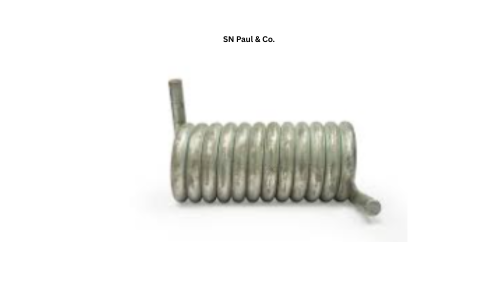
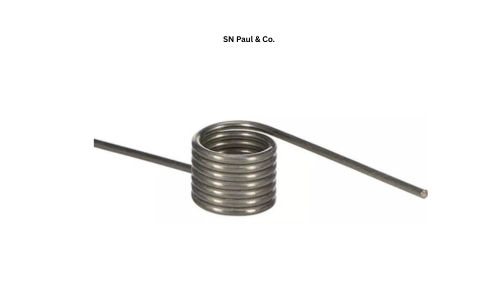
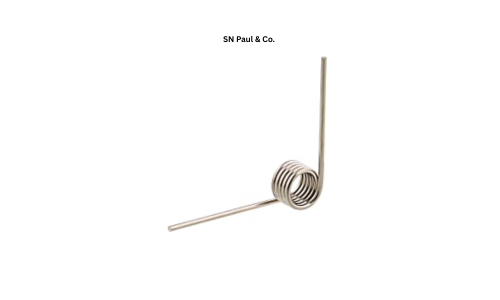
Our comprehensive range of Torsion Springs is engineered to exert a powerful rotational torque or angular resistance when twisted. Wound in both single and double body profiles, these springs are designed to offer highly controlled, predictable angular deflection across heavy industrial applications and torque-retention assemblies.
S.N. Paul & Co. is a premier industrial manufacturing firm specializing in engineering high-resilience components for heavy machinery and infrastructure. With decades of industrial manufacturing expertise, we deliver precision-crafted mechanical solutions that meet international standards for durability and performance.
Torsion Spring Manufacturer
Torsion springs store and release rotational energy, requiring precise mathematical calculations of leg geometry, coil pitch, and winding direction. Our state-of-the-art multi-axis CNC coiling centers handle custom wire profiles and intricate leg configurations to guarantee uniform structural lifecycle thresholds.
Here we furnish our maximum manufacturing capacity details for custom industrial Torsion Springs:
- Wire Diameter Range: Formed using premium wire stock ranging from 0.3 mm up to 42 mm.
- Coil Direction Options: Precision wound in clockwise (right-hand) or counter-clockwise (left-hand) orientations to match rotational forces.
- Leg Style Variations: Formed with straight, axial, radial, center-loop, or customized offset multi-bend configurations.
- Body Layout Profiles: Available in Single Torsion bodies, Double Torsion bodies, and Variable-Pitch profiles.
- Mandrel Clearance Engineering: Inner diameter tolerances tightly controlled to prevent binding around support shafts during winding contraction.
- Raw Materials Sourcing: High-carbon steel wire, Chrome-Silicon (CrSi) alloy wire, oil-tempered spring steels, and premium corrosion-resistant Stainless Steel (Grades 302, 316).
Understanding Torsion Spring Mechanics That We Manufacture
A Torsion Spring operates on the principle of angular displacement. Unlike standard compression units that get shorter under load, or extension variants that stretch, a torsion spring is subjected to a twisting motion about its longitudinal axis. When the legs are rotated relative to each other, the individual wire turns are subjected to bending stress rather than pure torsional stress, pulling the coils tighter together and accumulating rotational mechanical energy.
A critical engineering constraint of this geometry is that the spring's inner diameter shrinks and its body length increases as the spring winds up. Our design engineers map out these changes precisely against your machinery blueprints, ensuring adequate clearance around supporting guide rods or mandrels to eliminate mechanical friction, binding, or sudden lock-up during operation.
Primary Structural Classifications of Torsion Springs We Supply
To accommodate diverse torque demands, mechanical clearances, and stabilization needs, we manufacture every core classification of torsion architecture:
1. Single Torsion Springs Supplier
This is the standard and most frequently utilized layout, featuring a single concentrated body of coils with one leg extending from each end. Single torsion springs provide high angular resistance in compact setups. They are heavily selected for industrial lever returns, heavy hinge systems, automotive door assemblies, and quick-release mechanism latches.
2. Double Torsion Springs Supplier
Double Torsion configurations consist of two separate coil bodies—one wound clockwise and the other wound counter-clockwise—connected by an uncoiled bridging center section. These bodies work in parallel to exert a balanced torque over a broader structural footprint. Because they generate twice the torque of a single spring while preventing lateral tilting or skewing, they are ideal for overhead garage doors, large conveyor gates, and vehicle tailgates.
3. Miniature & Instrument Torsion Springs Supplier
Wound from fine-gauge stainless steel or alloy wire down to 0.3 mm, these miniature components are calibrated for low-torque, ultra-precise adjustments. They are widely implemented inside electrical switchgear panels, circuit breakers, camera shutter assemblies, and critical aerospace instrumentation modules.
Ensuring Critical Leg Configurations & End-Form Customization While Manufacturing
The legs of a torsion spring act as the primary connection conduits through which rotational force is transferred. We specialize in custom end-forming to adapt to various mounting frameworks:
- Straight Legs (Tangential or Radial): Extends directly from the coil edge without bends. This is the simplest layout, perfect for resting flat against a machine housing block.
- Axial Bends: The leg is bent 90 degrees to run parallel with the central shaft axis, allowing the spring to lock into precise holes drilled in mating gear assemblies.
- Hooked or Looped Terminals: Tips are formed into full circles or half-hooks to secure onto pins, bolts, or wire linkages without slipping off during high-frequency cycles.
- Multi-Bend Offsets: Utilizing multi-axis CNC wire-formers, legs can be bent into complex multi-planar paths to navigate around surrounding engine block walls or machinery obstacles.
Industrial Torsion Spring Price Structure
Pricing configurations are calculated per production run based on wire mass, winding style complexity, multi-bend leg setups, and load-mapping certifications:
- Standard Single Torsion Links: Engineered for commercial switches, automotive hinges, and mid-tier machinery, using high-carbon or stainless wire. Estimated range from ₹ 280 to ₹ 1,600 per piece.
- Heavy-Duty Double Torsion Units: Fabricated from thick-gauge oil-tempered or Chrome-Silicon alloys for industrial doors, lift systems, and heavy production lines. Price ranges from ₹ 4,000 to ₹ 26,000+ per piece.